Skip to content
Bangle Nest

Our story

There was never a moment the idea arrived.

The wood was already in the house. It had been there so long it had stopped being worth looking at.

The wood

Offcuts and turned rings came home the way other households accumulate spare buttons. Short lengths too small to build anything with. Rings left over from work on the lathe. They sat in corners and in boxes, and nobody thought about them, because that is what happens to things that are always there.

Maheer was ten when she stopped seeing scrap and started seeing bangles.

The problem

One kind cuts you. The other never leaves.

She wore bangles. Everyone she knew wore bangles. And the two kinds you could actually buy each had something wrong with them.

Glass ones broke — in a bag, against a desk, in an ordinary hug — and what was left was sharp. Not a dramatic injury. A nick on the inside of a wrist. A thin line that stings in the shower for a week.

Plastic ones never cut anybody. They simply never went away either. Worn for one wedding season, then in the ground for longer than anyone reading this will be alive.

She liked nature. She liked being safe. She could not see why those had to be two different choices.

The answer

Wood fails neither test.

It does not shatter, so there is no edge waiting to be found. And when it has been worn out completely, it goes back into the ground it came from. The material she needed had been in the corner of the room the entire time.

The first batch

She made them all the same size.
The whole first run. Every piece identical, finished, wrapped and ready — before anyone pointed out that wrists are not all the same size. Most of them fit almost nobody.

It is the kind of mistake you only make once, and it is the reason nothing here is kept in stock. Every Bangle Nest piece is now made after somebody asks for it, to the wrist it is going on.

The error turned into the way the business works.

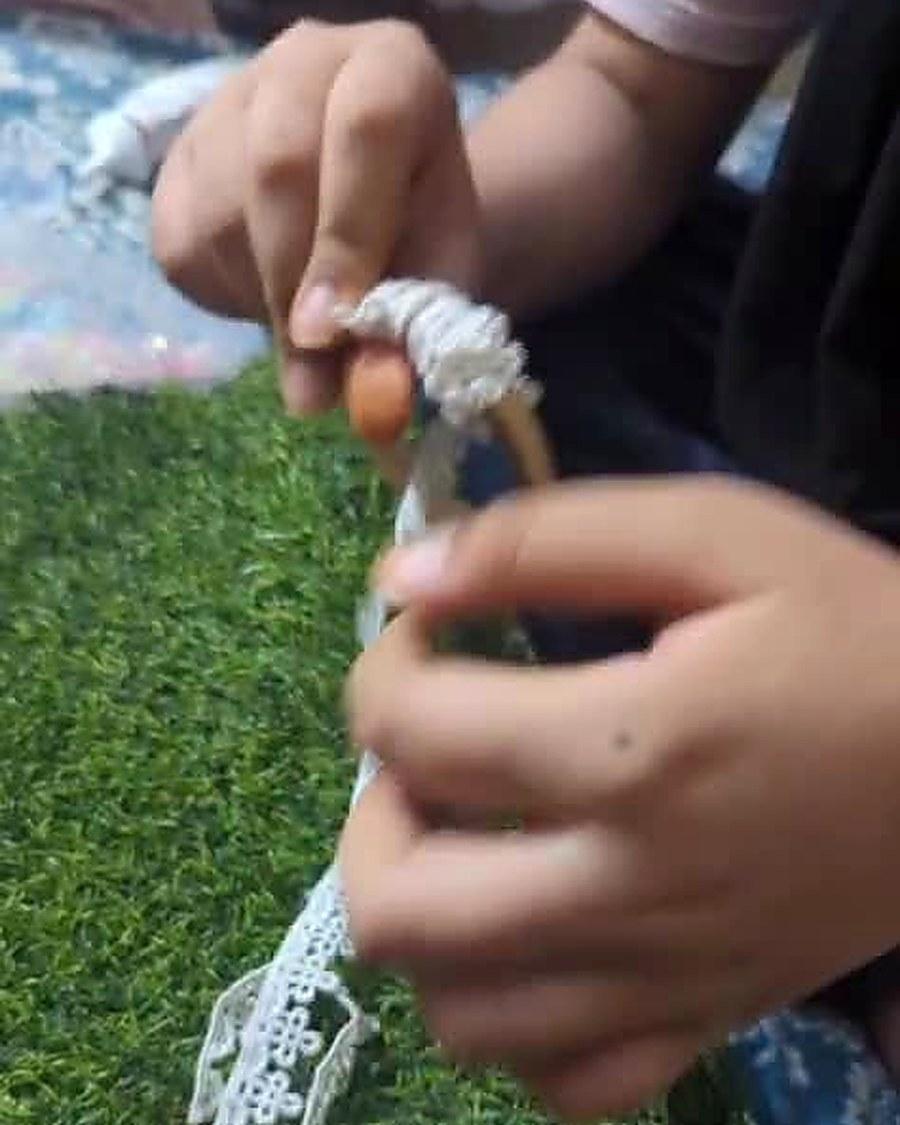
Hands winding cotton lace around a wooden bangle

The help

Nobody does this alone at ten.

The rings are turned by a craftsman who has worked a lathe for decades — an arrangement her parents found and negotiated, because a ten-year-old does not walk into a workshop and agree terms.

The business itself came together through Beaconhouse Startup Kidz, a young-founders programme that runs at the National Incubation Center Faisalabad — the same incubator that backs grown-up startups. Costing. Pricing. Pitching. The expectation that the thing actually sells.

What is hers is the rest of it: the material, the colours, the names, the winding, and every reply that comes out of the Instagram account.

The turn

The first person to pay for a bangle was a friend of the family. That is how most businesses begin and there is no sense dressing it up as anything else — people who love you buying the first thing you make is kindness, not proof.

The proof came later, from somebody she had never met.

A message from a stranger, asking for a specific colour, in a specific size. Then another. Not many — this is a ten-year-old making things by hand, one at a time — but enough that the question changed from whether anyone would buy one to how quickly she could make the next.

The name

A nest is built from whatever is lying around.

No bird buys materials. It gathers what has been dropped, discarded and blown into a corner, and it builds the one thing it intends to protect.

That is the entire business, and it was sitting in the name the whole time.

What she wants

She is not trying to build a chain of shops. Asked what Bangle Nest is for, she talks about natural practice — making things the way things used to be made, out of what is already here, and having that count for something.

It is a large ambition for a small business run out of a house. It is also, so far, exactly what she has done.

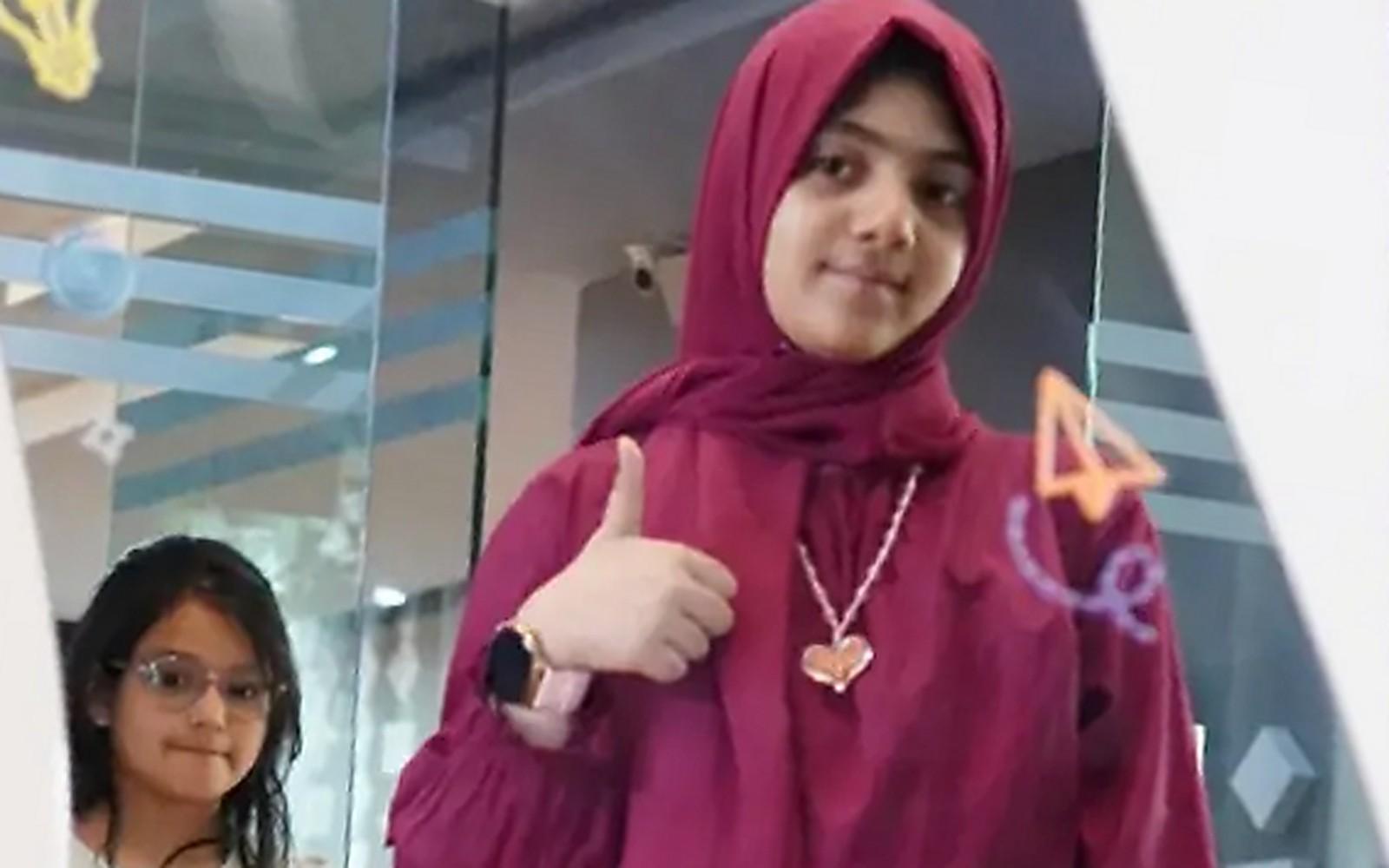
Maheer Fatima, founder of Bangle Nest
Maheer Fatima·Founder, Bangle Nest

Want one on your wrist?

Every piece is made after you ask for it, to the size you need. Send her a message — she answers them herself.